Health & Fitness
The Time For Discussion Has Ended. Homeless People Need Real Solutions.
Let's start restoring the pride, the belief and providing an opportunity to succeed for the homeless. We can do this in an eco-friendly, innovative and sustainable cycle of transformation.
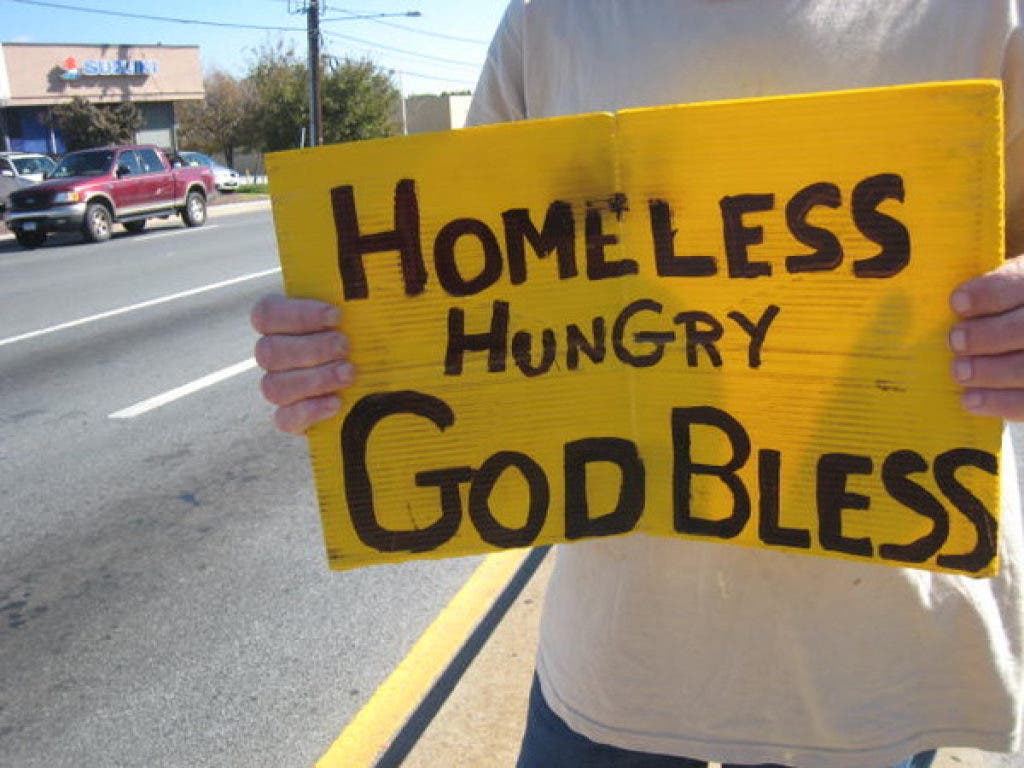
I just spent 20 minutes taking a survey on the issue of homelessness in the metro. It was filled with questions about many things that seemed out of place. My ability to measure how effectively the metro is combating homelessness is paramount to my ability as a man to accurately describe the pain of child birth. It seems to me that the people to ask how effective the city and adjacent county and city governments are addressing homelessness is, well, homeless people.
Even more frustrating than reading and answering a lengthy survey only available on line about homelessness is the lack of substainative solutions. The survey was mostly about how to create and assess and expand on solutions that do not directly address homelessness. In essense, the survey wanted to measure the effectiveness of measuring the potential to address homelessness. To visualize this process, imagine a circle and you are driving around this circle and you can only stop once you have reached the edge of the circles' end. There is no way to reach the edge of a circle's end. There can be no good or productive outcome to measuring the potential of addressing homelessness. There is no greater waste of time than talking about solutions to problems without acting to solve them.
There are simple and effective ways to solve homelessness in Atlanta and they can be done starting Monday morning. Here is how we solve a majority of the homeless issue and create jobs at the same time:
Find out what's happening in East Atlantawith free, real-time updates from Patch.
1. Using the old Lakewood General Motors plant near the Federal Penitentiary, the city, county and state will assist in securing funds to develop the area into a live/work/learn industrial area.
2. In this area, we will take cargo shipping containers and refurbish them into living space. We will take the old, used containers from the Savannah port, ship them to the site by train, strip them down to the metal and turn them into housing units. We will do this on an assemble line.
Find out what's happening in East Atlantawith free, real-time updates from Patch.
3. The housing units will be used on the property to house the workers who were previously homeless. They will live there, work there and learn the skills necessary to transform the cargo containers into housing units, how to assemble the units into small communities and how to maintain the units.
To ensure sustainability, we will work with FEMA and other states to provide the units as temporary shelters in the event of an emergency or to assist other states in solving their homeless problems. We will use carpet from Dalton, Georgia, home grown bamboo for counter tops and cabinetry in a joint-project with Georgia-Pacific and pioneer plastic shelving and storage uses while working with Newell-Rubbermaid.
As we continue to refine and reinvent our little project, creating, assessing and expanding to provide real solutions while taking people off the streets, providing them with a stable residence with a real address they can call their own, job training with transferable skills, a central place for medical and mental health solutions and restoring a sense of pride to them, we will have turned a negative into a positive.
It can be just that simple. If anyone is ready to start working on Monday, give me a call. I'm ready to get started. Because people without homes need more than a place to live. They need a reason to be proud, a reason to believe and an opportunity to succeed. We can make it happen.
